Core Technological Foundations of Huawei Smart Site
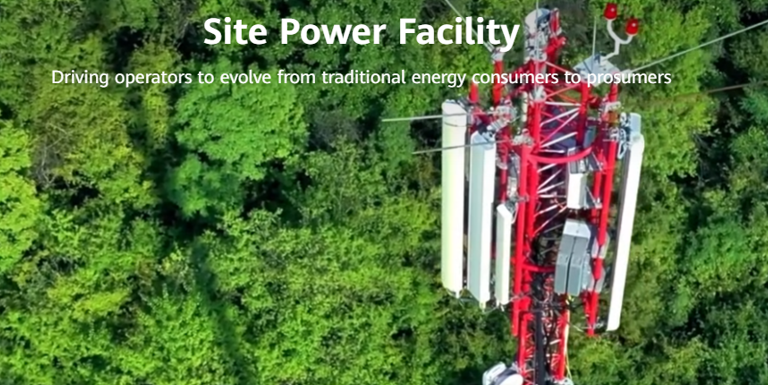
Huawei Smart Site is not merely a network hardware installation; it is an integrated intelligent system designed to resolve longstanding telecom site pain points: excessive energy consumption, slow deployment, and inefficient maintenance. At its core lies a suite of interconnected technologies tailored for adaptability and real-time intelligence. The system’s Active Site Management (ASM) platform acts as its brain, leveraging AI algorithms to analyze data from sensors embedded in every component: power modules, cooling systems, radio units, and backhaul links. For instance, in regions with extreme temperatures like the Sahara, the ASM automatically switches between air cooling and natural ventilation to cut energy waste by up to 35% compared to conventional sites. This level of automation eliminates manual adjustments, reducing operational burdens for field teams.
Beyond energy efficiency, Huawei Smart Site prioritizes reliable performance through intelligent power management. It supports hybrid power solutions combining solar panels, batteries, and backup generators, with the ASM optimizing the power mix based on weather forecasts and energy demand. In off-grid areas, this feature removes reliance on constant diesel refueling—a major challenge in remote regions. The radio access layer uses dynamic spectrum allocation, smartsite adjusting signal strength and frequency in real time to handle varying user loads, critical for crowded spaces like stadiums or city centers during events. Security is another key pillar: end-to-end encryption for all data transmissions and built-in firewalls block unauthorized access, with zero reported breaches in high-risk Middle Eastern deployments over two years, unlike nearby traditional sites that faced three breaches.
Global Deployment Success Stories: Bridging Gaps in Diverse Terrains
One of the most impactful deployments took place in Kakamega, rural western Kenya, where I conducted a 2022 field survey with local operator Safaricom. Before the rollout, only 25% of the county’s population had reliable mobile coverage; farmers like Neema Wanjiru walked 10 kilometers daily to access signals to check crop prices or send remittances. After installing Huawei Smart Site’s modular stations, coverage rose to 85% within six months. Neema told me she now monitors avocado prices in Nairobi via her phone, selling her harvest at optimal rates and boosting her monthly income by 20%. The system’s solar-powered operation eliminated diesel reliance, cutting monthly fuel costs for Safaricom by $1,200 per site.
Another standout case is Berlin’s Alexanderplatz, a busy urban hub with 100,000+ daily visitors, including peak Christmas market crowds. Before Smart Site, operator Telefonica faced frequent network congestion, dropping calls and slow data. The system’s dynamic capacity scaling automatically allocates extra radio resources during traffic spikes. During the 2023 Christmas market, the site handled 1.2 terabytes of data per hour—40% more than the previous year—with no outages, per Telefonica’s post-event report. This adaptability resolves a longstanding urban telecom pain point where dense user activity cripples service.
A third example comes from Malaysia’s Perhentian Islands, remote tourist spots where traditional site construction took three months due to rugged terrain and limited access. Using Huawei’s prefabricated container-style Smart Site stations, operator Maxis completed five sites in 10 days; each unit was shipped in one container, with installation requiring only basic tools. Tourists now enjoy seamless 5G, supporting live-streaming and remote work for digital nomads. This deployment proved Smart Site’s value in hard-to-reach areas where speed and cost-effectiveness matter most.
Key Competitive Advantages That Redefine Site Operations
Energy efficiency is the most cited advantage, but it extends beyond basic power savings. For hybrid-powered rural sites, the ASM predicts solar output via weather data, adjusting battery charging to minimize generator use. In Kakamega, this reduced diesel consumption by 80% compared to traditional sites, directly lowering operational costs. Urban sites benefit from dynamic cooling that adjusts to user load—cooling is cut when traffic is low, further reducing monthly utility bills. A 2023 Huawei global telecom report notes operators see an average 30% reduction in site energy costs after adopting Smart Site.
Maintenance efficiency is another game-changer. The system’s AI diagnostic tools detect potential faults up to seven days early, using sensor data to spot anomalies. In a German urban site, the system identified a power module voltage drop, alerting technicians to replace it before failure, preventing a 24-hour outage. Operators report a 60% drop in unplanned outages, as predictive maintenance eliminates emergency site visits—especially critical for remote areas where travel is costly and time-consuming.
Deployment speed is pivotal for operators expanding coverage quickly. Traditional sites require extensive on-site construction: digging foundations, installing towers, running cables, taking weeks or months. Smart Site’s prefabricated modules use plug-and-play connectivity, cutting installation time by 75%. During 2022 Pakistan floods, Huawei deployed Smart Site stations in disaster zones within 48 hours, restoring emergency communication for displaced communities—faster than any traditional method could achieve. This agility makes Smart Site a go-to for disaster response and rapid rural expansion.
Future Evolution: Aligning With 6G and All-Scenario Intelligence
As networks move toward 6G, Huawei Smart Site is a core enabler for next-gen connectivity. It’s already tested with terahertz (THz) radio access, offering 100+ Gbps speeds for holographic calls and 8K streaming. In a 2024 Shanghai trial, a Smart Site with THz modules delivered real-time 8K streams to multiple users simultaneously, outperforming 5G’s limits. The ASM’s precise power management and adaptive beamforming handle THz’s unique requirements, ensuring stable high-bandwidth connections.
Beyond 6G, Huawei is integrating Smart Site with edge computing and smart city infrastructure, turning each site into a multi-functional node. In a Shenzhen pilot, Smart Site stations provide 5G/6G connectivity while hosting sensors that monitor air quality, traffic, and noise. Edge processing handles local data in real time, reducing latency; if a sensor detects congestion, the site alerts traffic management to adjust signal timings, cutting wait times by 15% in test zones. This blurs the line between telecom infrastructure and urban digital services.
Looking ahead, Smart Site will support industrial IoT (IIoT) and autonomous vehicles. For mining in Western Australia, Smart Site stations connect IoT sensors on trucks, enabling sub-second latency tracking of vehicle locations and performance, boosting safety and efficiency. For autonomous vehicles, the system’s precise positioning and V2X communication support safe navigation in urban and highway settings. Huawei’s roadmap also includes expanding Smart Site to cover rural smart agriculture, where connectivity enables soil moisture monitoring and automated irrigation—extending its impact beyond telecom to broader societal needs.